There is a familiar instruction in moments of pressure: take a deep breath.
It is well meant. Yet "deep" can become another task to perform well, especially when your mind is already moving too quickly. You fill your lungs, lift your chest, try to force calm, then carry on at the same speed.
A more useful place to begin is the way out.
The exhale is the part of the breath that gives the body a clear cue to ease its pace. Extending it slightly, without straining or holding, can create a small interruption between what has just happened and what you do next. In a difficult meeting, before an important call, at the point when a message lands badly, that interruption can matter.
The aim is simple: a physical way to return to a steadier rhythm when you notice that you have left it.
The body already knows the rhythm
Breathing and heart rhythm are linked. During an inhale, heart rate naturally tends to rise. During an exhale, it tends to slow. This normal pattern is part of the body's ongoing conversation between breathing, the heart, and the autonomic nervous system.
That does not mean an exhale acts like a switch. Bodies are more nuanced than that, and a breath pattern that feels settling for one person may feel awkward for another. The wider picture matters too: sleep, workload, movement, caffeine, conflict, hormones, health, and the context you are in.
Still, the direction is useful. A slower, smoother breath can support a calmer rhythm. The out-breath gives you a practical place to work with it because it is active. You can lengthen it a little. You can soften into it. You can feel the moment of release rather than merely thinking about it.
For many people, the problem under pressure is rarely a lack of oxygen. It is a loss of pace. The breath gets shallow or fragmented, the shoulders rise, attention narrows, and every thought begins to arrive with the same urgency. A deliberate exhale offers a way to change the tempo without needing to solve the whole situation first.
Why "breathe deeply" is often the wrong instruction
Deep breathing can be helpful, yet depth is not always the point. When people are keyed up, a dramatic inhale can sometimes make them more aware of the sensation in their chest, or encourage overbreathing. What tends to be more workable is gentle, unforced breathing with a little more time on the way out.
Think of it as editing rather than performing. You are not trying to produce the perfect breath. You are giving the next exhale enough room to finish.
A simple approach is to let the inhale arrive naturally, then allow the exhale to take a beat or two longer. The ratio does not need to be exact. There is no prize for reaching a particular count. The useful question is quieter: can this breath be slower than the one before it, without effort?
This is why the exhale is often the more dependable signal in a busy life. It asks for less. It can fit inside a few seconds, in whatever setting you happen to be.
The distinction matters. A technique that demands ideal conditions is easy to admire and hard to use. A cue that fits inside ordinary life has a better chance of becoming part of it.
A physical cue changes the equation
Knowing what helps is different from remembering to do it while you are in the middle of a real day.
That is where objects can earn their place. A cup of coffee can become a beginning-of-work ritual. A wedding ring can carry meaning without needing explanation. The things we touch repeatedly shape behavior because they remove the need to start from zero each time.
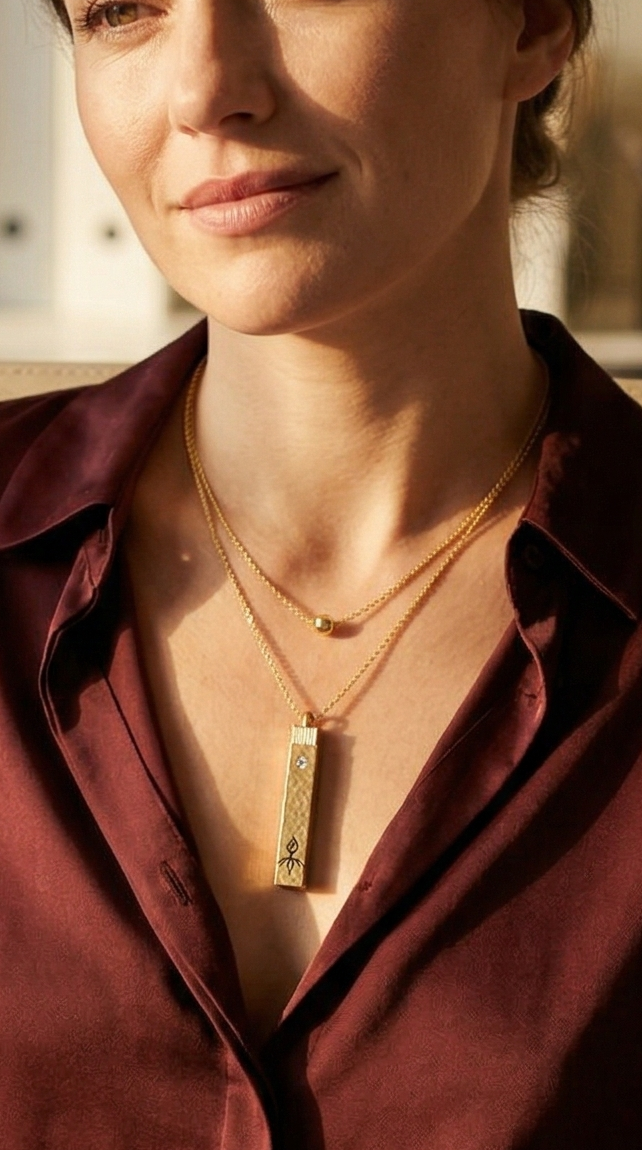
A breathing pendant works in that spirit. Worn close to the body, it creates a visible and tactile reminder of a simple action: bring it to your lips and take a slower exhale through the channel. The gentle resistance gives the breath a shape. Some people find that easier than silently counting, particularly when their attention is scattered.
The object does not create composure on your behalf. It gives you a clear route back to a practice you already understand. That is a more honest role for design.
At Aurelae, this is why the internal channel matters as much as the exterior form. The pendant is designed to make a deliberate exhale feel tangible, while still belonging in the visual language of everyday jewelry. Its value lies in the moment it helps make easier to access.
Composure is built in small returns
The goal is not permanent calm. A demanding, ambitious life should contain energy, urgency, and momentum. The question is whether you can recognize the moment when momentum has become noise.
A longer exhale can become a private signal: pause here. Let this breath end. Choose the next response with a little more space around it.
Use it before you enter the room. Use it after you leave one. Use it when the day has become too loud in your head. Then move on.
That is enough. A small reset, repeated when it counts, can be far more useful than a perfect ritual you only practice when life is already quiet.